A Mark of Identity: Understanding the Legal Requirements for Number Plates in the UK and on the Roads of Leyland and Preston
The vehicle registration plate, that seemingly simple rectangle of letters, numbers, and reflective material, is far more than a random identifier. In the United Kingdom, it is a crucial piece of legal documentation, a tool for law enforcement, and a direct link between a vehicle, its owner, and the national database. For every driver, from the commuter navigating the A6 into Preston to the haulier operating from Leyland’s famous truck factories, adherence to the strict legal requirements governing number plates is not a matter of choice but of law. Understanding these rules in their entirety—from the fundamental national standards to the specific enforcement realities in Lancashire—is essential for ensuring compliance, avoiding penalties, and contributing to road safety and security.
The foundation of UK number plate law is the function of the plate itself: to provide a unique, clear, and consistent identifier for a vehicle. This identifier is allocated by the Driver and Vehicle Licensing Agency (DVLA) upon registration and follows a specific format, most recently the current format introduced in September 2001. This system, often called the “prefix” or “new style” plate, reads as follows: two letters (the memory tag identifying the region of first registration), two numbers (the age identifier), and a final three random letters. For instance, a plate beginning “LA” would signify the vehicle was first registered in London, and the two-digit code “24” would indicate it was registered between March and August 2024. This system allows for immediate recognition of a vehicle’s age and origin, a feature useful for both consumers and authorities.
The physical construction and appearance of the number plate are subject to equally precise regulations. By law, number plates must be made from a reflective material. This is a critical safety feature, ensuring the vehicle is visible and identifiable in low-light conditions and when headlights illuminate it at night. The background must be white for the front plate and yellow for the rear plate, providing a clear contrast for the black characters. The character font is legally mandated to be the standardized “Charles Wright 2001” font. This specific font was chosen for its maximum legibility, preventing the use of hard-to-read stylised typefaces that could hinder identification. There are strict rules regarding spacing between characters and the margins around the plate’s edge, and the plate must display the name and postcode of the supplier, the British Standard number (BS AU 145e), and a non-reflective border is optional.
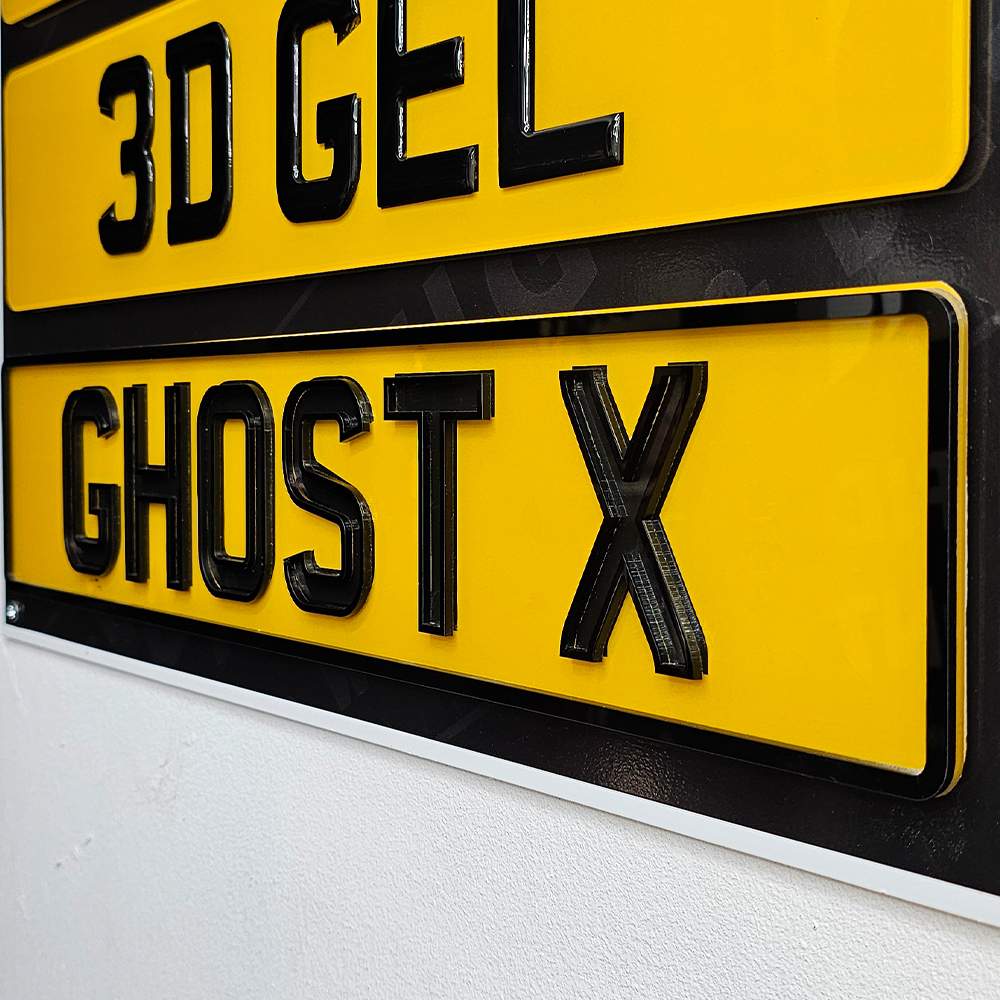
Any deviation from these standards constitutes an illegal number plate. Common infringements that drivers in Leyland and Preston must be vigilant against include the use of so-called “4D” plates with raised characters that alter the official font’s appearance, the use of incorrect bolts to create patterns (such as fixing bolts placed to look like a football club logo), and the use of tinted acrylic covers. Perhaps the most frequent and tempting illegal modification is the deliberate mis-spacing of characters—for example, using spacers to make a plate read “PR 3ST ON” instead of “PR3 STON”. While often perceived as a harmless personalisation, this is a direct violation of the law, as it obscures the true registration mark.
The consequences for non-compliance are significant and can be swiftly enforced. Under the Road Vehicles (Display of Registration Marks) Regulations 2001, driving with an illegal number plate can result in a fixed penalty notice of £100. However, if the case proceeds to court, the fine can increase to £1,000. More critically, a vehicle with an illegible or non-compliant plate will fail its MOT test. For a driver in Leyland relying on their car for the daily commute to Preston or a business in Preston dependent on its vans, an MOT failure means the vehicle is immediately off the road, incurring costs for replacement plates, a retest, and potentially lost income. Furthermore, an obscured plate makes a vehicle a prime target for Automatic Number Plate Recognition (ANPR) cameras, which may fail to read it correctly, potentially linking the vehicle to traffic violations, congestion charge evasion, or more serious crimes, leading to stressful and time-consuming interactions with the police.
For drivers in Leyland and Preston, the local context adds another layer of relevance to these national laws. Both towns are hubs of Lancashire’s road network, with the M6, M61, and M65 motorways converging nearby, and major arterial routes like the A6 and A59 running through them. This high-density road infrastructure is saturated with ANPR technology. From average speed check cameras on motorway roadworks to fixed cameras monitoring bus lanes in Preston city centre and police vehicles equipped with mobile ANPR systems, a vehicle’s number plate is being constantly scanned. A dirty, damaged, or illegally altered plate that prevents a clear read is not just a minor infraction; it is a direct impediment to this automated enforcement and security system, guaranteeing unwanted attention.
Moreover, Leyland’s heritage as the home of Leyland Trucks means the streets are frequently used by HGVs and delivery vehicles. The commercial drivers and fleet operators based in the area have a particular responsibility to ensure their vehicles are fully compliant. A £100 fine for an illegal plate is a minor operational cost, but an MOT failure for a fleet vehicle can disrupt logistics, delay deliveries, and harm a business’s reputation for reliability. For all drivers in Preston, where parking enforcement in the busy city centre and university areas often relies on ANPR systems to track vehicle entry and exit, a non-compliant plate could result in an incorrect parking charge or a failure to register a valid payment, leading to fines and appeals processes.
In conclusion, the legal requirements for number plates in the UK are a meticulously crafted set of rules designed to uphold a system of clear identification, which is fundamental to road safety, law enforcement, and vehicle administration. For the driver in Leyland or Preston, treating these regulations with anything less than full respect is a risk with tangible consequences. The potential for fines, MOT failure, and increased scrutiny from the pervasive ANPR network makes compliance the only rational choice. Ensuring your number plates are clean, undamaged, correctly spaced, and conform to all material and font standards is a simple yet vital aspect of responsible vehicle ownership. It is a small but significant act that keeps your vehicle legal, your journey uninterrupted, and contributes to the smooth and secure functioning of the road network that connects the communities of Lancashire.